


Page 35 - Innovator's Science-8
P. 35
Maintain personal hygiene
                                                                     Headache, abdominal       and good sanitary habits,
              Typhoid                Bacteria        Intes ne        discomfort, fever, and    consump on of properly
                                                                     diarrhoea                 cooked food and boiled
                                                                                               drinking water, vaccina on

              Ascariasis                                                                       Maintain personal hygiene
                                                                     Worms in stool, loss of
              (roundworms)                                                                     and good sanitary habits,
                                                                     appe te, poor growth,
                                     Worms           Intes ne                                  consump on of properly
                                                                     diarrhoea, weight loss,   cooked food and boiled
                                                                     anaemia
                                                                                               drinking water

                 Diseases           Causal agent   Site of infec on        Symptoms              Preven ve Measures
                                                    Diseases transmi ed by insects

             Malaria                                                                            Use of mosquito nets and
                                                                                                repellents, wearing long-
                                                                     High fever, profuse
                                     Protozoa        Skin, blood                                sleeved clothes, control
                                                                     swea ng, periodic chills
                                                                                                of mosquito breeding in
                                                                                                and around your home

              Dengue fever                                                                      Use of mosquito nets
              (Break bone fever)                                                                and repellents, wearing
                                                                                                long-sleeved clothes,
                                                                     Fever, headache, muscle
                                     Virus           Skin, blood                                control of mosquito
                                                                     and joint pain, nausea
                                                                                                breeding in and around
                                                                                                your home, avoiding
                                                                                                areas with s ll water


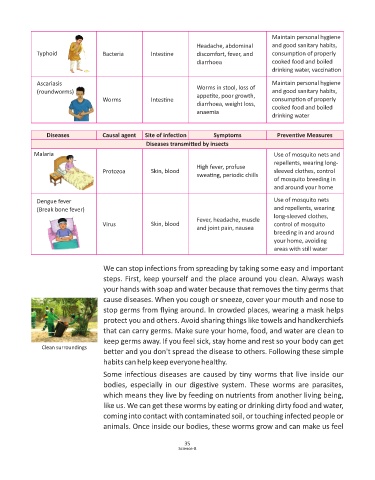
                                     We can stop infections from spreading by taking some easy and important
                                     steps. First, keep yourself and the place around you clean. Always wash

                                     your hands with soap and water because that removes the tiny germs that
                                     cause diseases. When you cough or sneeze, cover your mouth and nose to
                                     stop germs from flying around. In crowded places, wearing a mask helps
                                     protect you and others. Avoid sharing things like towels and handkerchiefs
                                     that can carry germs. Make sure your home, food, and water are clean to

                                     keep germs away. If you feel sick, stay home and rest so your body can get
               Clean surroundings
                                     better and you don't spread the disease to others. Following these simple
                                     habits can help keep everyone healthy.

                                     Some infectious diseases are caused by tiny worms that live inside our
                                     bodies,  especially  in  our  digestive  system.  These  worms  are  parasites,
                                     which means they live by feeding on nutrients from another living being,

                                     like us. We can get these worms by eating or drinking dirty food and water,
                                     coming into contact with contaminated soil, or touching infected people or
                                     animals. Once inside our bodies, these worms grow and can make us feel


                                                                 35
                                                               Science-8

