


Page 175 - Innovator's Science-8
P. 175
Other ecosystems like forests, rivers, wetlands, grasslands, scrublands, and
                                     coastal areas are also at risk due to:
                 Science             •  Deforestation
                     Bytes

                           Testimony  •  Overuse of resources
                Protected areas are
              special parts of land or   •  Pollution
              water that are set aside   •  Spread of harmful species (invasive species)
              to conserve wildlife and
               their natural homes.   •  Unsustainable land use
              These places are created
              to protect endangered   •  How can we stop harming forests, rivers, and wetlands?
              animals, rare birds, and   •  What can you and your community do to protect nature?
               unusual plants, and to
               keep ecosystems safe.  Think about, even small actions like planting trees, using less plastic, saving
                                     water, or joining clean-up drives can help protect ecosystems and keep the
                                     Earth healthy!

                                     India has many different types of protected areas, such as:
                                     •  National Parks

                                     •  Wildlife Sanctuaries

                                     •  Biosphere Reserves
                                     •  Community Conserved Areas

                                     These protected zones help in preserving the rich biodiversity of India and

                                     also make sure that future generations can enjoy and learn from nature.
                                     Famous Protected Areas in India

                                     Here are some well-known places that protect wildlife and nature:

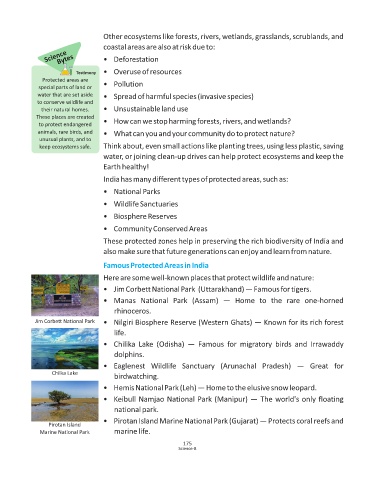
                                     •  Jim Corbett National Park  (Uttarakhand) — Famous for tigers.
                                     •  Manas  National  Park  (Assam)  —  Home  to  the  rare  one-horned
                                        rhinoceros.

             Jim Corbett National Park  •  Nilgiri Biosphere Reserve (Western Ghats) — Known for its rich forest
                                        life.
                                     •  Chilika  Lake  (Odisha)  —  Famous  for  migratory  birds  and  Irrawaddy

                                        dolphins.
                                     •  Eaglenest  Wildlife  Sanctuary  (Arunachal  Pradesh)  —  Great  for
                   Chilka Lake
                                        birdwatching.
                                     •  Hemis National Park (Leh) — Home to the elusive snow leopard.
                                     •  Keibull Namjao National Park (Manipur) — The world's only floating

                                        national park.
                                     •  Pirotan Island Marine National Park (Gujarat) — Protects coral reefs and
                  Pirotan Island
               Marine National Park     marine life.
                                                                175
                                                               Science-8

